
Art Experience for Color Bind/Color Deficient People
If you’re color blind or color deficient, you already know the awkward moment: someone says “Look at the red detail over there,” and you smile while quietly guessing. Art spaces can unintentionally amplify that feeling, because so many exhibitions lean on color cues without offering another way in. The good news is that a rich […]
If you’re color blind or color deficient, you already know the awkward moment: someone says “Look at the red detail over there,” and you smile while quietly guessing. Art spaces can unintentionally amplify that feeling, because so many exhibitions lean on color cues without offering another way in. The good news is that a rich art experience does not depend on perfect color vision. With a few smart tools, supportive galleries, and a shift in how we “read” artworks, art can become more accessible, more relaxed, and honestly more interesting.
Color vision deficiency (CVD) is common and usually inherited. The most frequent types affect how reds and greens are perceived (often called protan and deutan variations), while tritan variations affect blues and yellows and are rarer. Some people have mild shifts; others have stronger differences. This means two visitors can stand in front of the same painting and genuinely see different relationships between hues, contrast, and depth. That is not a “lesser” experience, just a different one.
Table of Contents
Why art can feel harder when color cues do the heavy lifting
Many artists use color to create hierarchy, emotion, symbolism, and focal points. In a label, a curator might describe “warm crimson tension against cool green,” but if those hues compress into similar tones for you, the intended contrast can disappear. Maps in museums, colored dots on wall guides, or “follow the blue line” directions can also create friction.
But here’s the flip side: art is not only color. Composition, line, texture, material, scale, rhythm, negative space, perspective, storytelling are all equally real entry points. When you lean into those, you often discover details other visitors miss because they’re busy chasing color names.
For individuals experiencing color vision deficiency, it’s important to understand that this condition is common and usually inherited.
How to enjoy art more deeply with color deficiency
Start by switching your internal question from “What color is it?” to “What is it doing?” Look for where your eye is pulled first, then ask why. Is it a sharp edge, a bright value (lightness), a repeated shape, a high-contrast boundary, or a change in texture? Value contrast is often more reliable than hue contrast for many forms of CVD (color blind), so noticing light and dark patterns can reveal the structure the artist built underneath the color.
It also helps to get closer, then step back. Up close you can read brushwork, layering, and surface choices. From a distance you can see balance, symmetry, depth, and the overall flow. If you’re in a gallery, give yourself permission to take your time. Art is one of the few places where lingering is allowed.
Simple tools that can make a big difference

Your phone can act like an accessibility lens. Camera filters, contrast adjustments, and color identification apps can help you interpret labels and descriptions that rely on specific hues. Some people find that toggling to grayscale is surprisingly useful because it emphasizes value structure and composition, especially for modern and abstract works.
If you wear tinted lenses or have tried color-filter glasses, think of them as optional tools, not “fixes.” They may help in certain lighting and certain palettes, and feel unhelpful in others. The goal is comfort and clarity, not forcing your eyes to behave differently.
What galleries and artists can do to be more inclusive
Accessibility is not only ramps and audio guides. Color accessibility matters too, and it is often easy to improve without changing the art. The best spaces make information redundant, so color is never the only channel.
Here are a few practices that noticeably help (and they help everyone, not just people with CVD/ color blind):
- Use patterns, icons, or clear text labels instead of color-only dots for maps and guides.
- Write labels that describe value, texture, composition, and subject matter, not only hue comparisons.
Even small changes like better lighting consistency, stronger typography on labels, and clearer wayfinding can reduce fatigue and make the visit more enjoyable.
Activities and art forms that tend to shine without relying on color
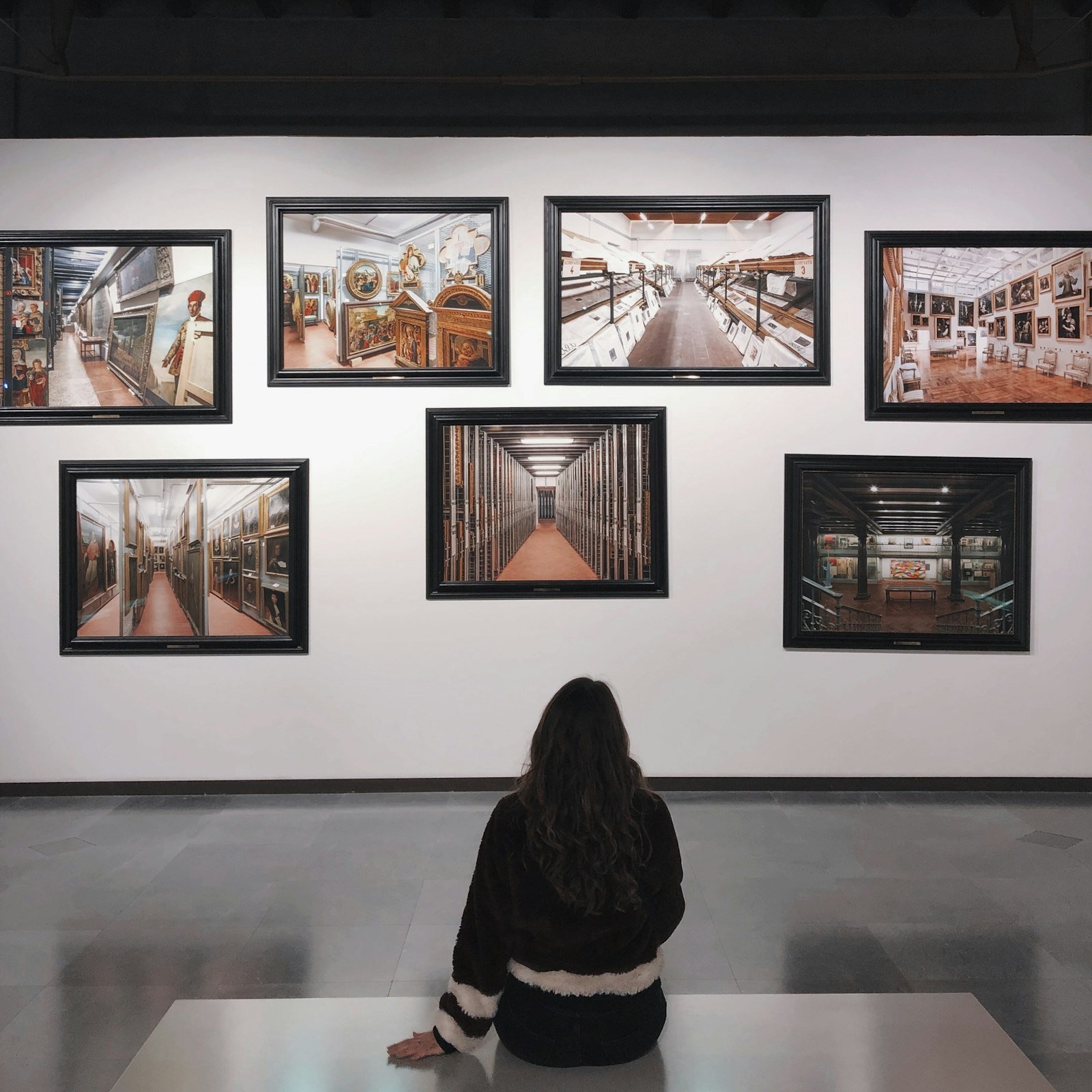
If you want art experiences that naturally lean on form and texture, sculpture, ceramics, printmaking, architecture, photography focused on light, and textile work can be incredibly satisfying. Many contemporary installations also use sound, movement, or tactile elements, which can shift the experience away from strict color reading.
That said, don’t avoid painting. Instead, try approaching it like you would music: you do not need to name every note to feel the structure. If a piece moves you, that response is valid even if your palette is different.
Bringing it back to well-being
Feeling left out, confused, or rushed in cultural spaces can quietly add stress. When art becomes accessible, it can become restorative. A good gallery visit can slow your breathing, spark curiosity, and give your mind a break from constant decision-making. That is a wellness win, and it belongs to everyone, including people with color deficiency.
FAQs
Can I still appreciate art if I’m color blind?
Absolutely. Art is more than hue. Composition, contrast, texture, subject, symbolism, and scale all carry meaning, and many visitors with CVD/ color blind notice structure and detail that others overlook.
What should I do if museum directions rely on color?
Ask staff for an accessible map or written directions. Many venues can offer alternatives, and feedback helps them improve. You can also use your phone to zoom labels and increase contrast.
Do color-correcting glasses work for art galleries?
They help some people in some situations, but results vary with lighting, artwork palettes, and your specific CVD/ color blind type. Treat them as an optional aid, not a guaranteed solution.
Which kinds of art are easiest with color deficiency?
Sculpture, ceramics, architecture, textiles, and high-contrast photography often rely more on form and value than hue. Still, paintings can be deeply rewarding when you focus on structure and storytelling.
Experience More with Health Hub AU
At Health Hub AU, we believe accessible experiences are part of real wellbeing. If you or someone you love lives with color deficiency, we’re here to help you feel informed, confident, and included. Explore more practical guides with us, share this article with a friend, and keep building a life that supports your health in everyday, real-world ways.
Author Details
