
Embryo screening case studies and experts
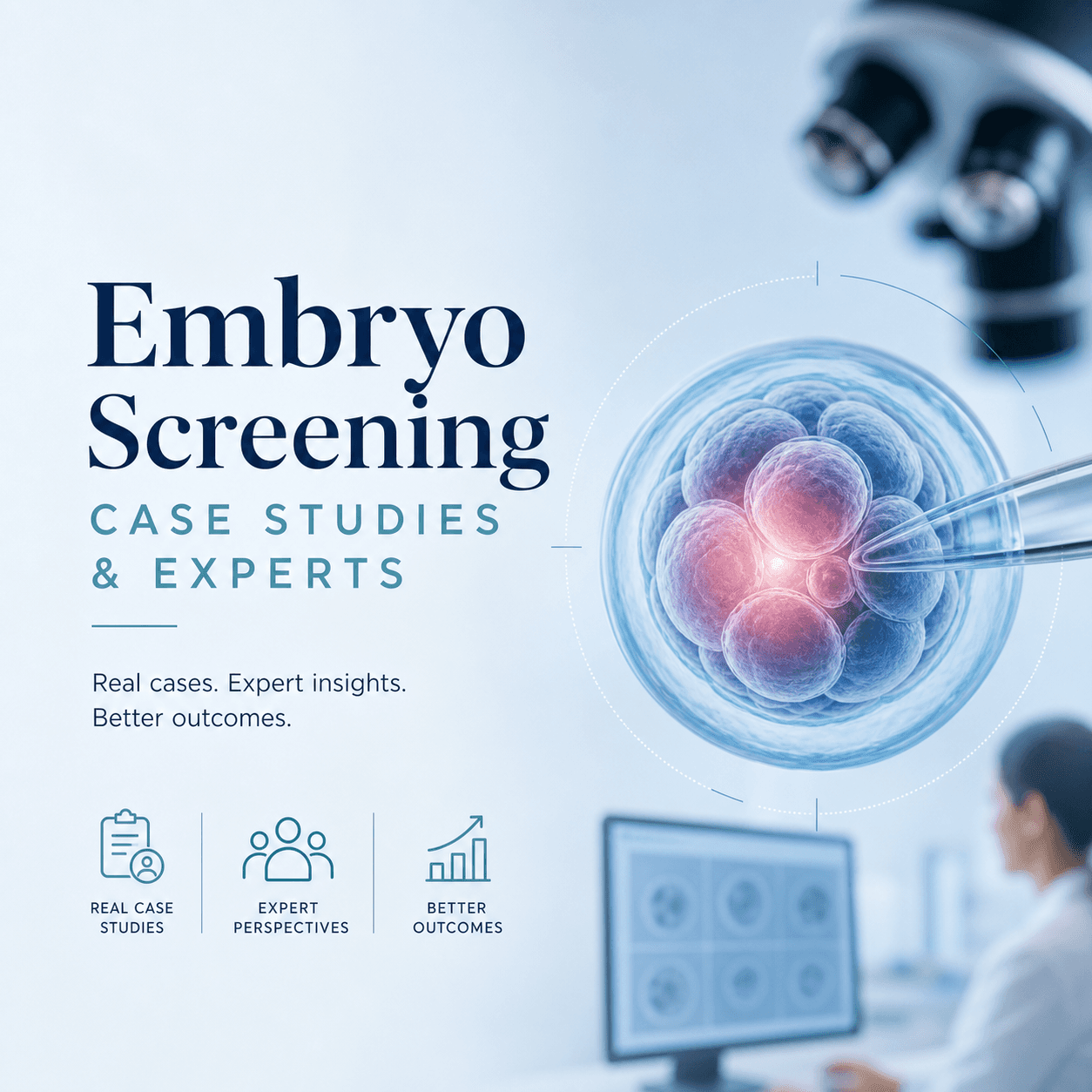
Embryo screening, often referred to as PGT (preimplantation genetic testing), has quietly become one of the most discussed tools in modern IVF. Not because it guarantees a baby (it doesn’t), but because embryo screening for IVF success can help some people reduce uncertainty by learning more about embryos before transfer. At Health Hub AU, we […]
Embryo screening, often referred to as PGT (preimplantation genetic testing), has quietly become one of the most discussed tools in modern IVF. Not because it guarantees a baby (it doesn’t), but because embryo screening for IVF success can help some people reduce uncertainty by learning more about embryos before transfer.
At Health Hub AU, we like to keep this conversation grounded. Embryo screening in fertility treatment can be incredibly useful in the right context, and unhelpful or even misleading in the wrong one. The most reliable way to understand embryo screening latest techniques is through real-world patterns, the kinds experts see every day, plus a clear view of who should be in the room when decisions are made.
Table of Contents
What embryo screening actually looks for (and what it doesn’t)
There are a few main “types” of PGT. PGT-A screens for chromosomal aneuploid (extra or missing chromosomes). PGT-M looks for a specific single-gene condition already known in a family (like cystic fibrosis). PGT-SR is used when one parent has a structural chromosome rearrangement, like a balanced translocation.
What embryo screening for chromosomal abnormalities does not do is confirm a baby will be healthy in every way, predict personality or intelligence, or eliminate the chance of miscarriage entirely. Embryo screening genetic testing also cannot “fix” an embryo. It simply provides information for embryo screening before implantation that may change which embryo is transferred first, or whether further testing is recommended.
Case study patterns experts see (with the nuance that matters)
The stories below are not medical advice and they are not one-size-fits-all. They are case patterns fertility specialists and genetic counsellors commonly describe, because they highlight where embryo screening accuracy and safety tends to help, and where expectations for embryo screening for healthy pregnancy need a reset.
Case pattern 1: Recurrent miscarriage and the “why” question
A common referral comes after two or more miscarriages. Clinicians may consider PGT-A if there’s a suspicion that chromosomal issues are contributing. In some cases, screening helps identify embryos more likely to implant and continue, especially with increasing maternal age, where aneuploidy rates rise.
But experts also stress something many people do not hear clearly enough: miscarriage is multi-factorial. Uterine factors, thyroid issues, clotting disorders, sperm DNA fragmentation, and chance can all play a role. The “best” plan often includes both a reproductive endocrinologist and a genetic counsellor so you’re not using PGT as a blunt tool for a complex problem.
Case pattern 2: A known inherited condition in the family
This is where PGT-M is often most straightforward. For example, if both partners are carriers of an autosomal recessive condition, or one partner has a dominant genetic disorder, the goal is typically to avoid transferring embryos predicted to be affected.
What experts add here is the practical detail: PGT-M usually requires custom lab work, family genetic reports, and sometimes samples from relatives to build an accurate test. It can take time, and time matters emotionally and financially. The strongest clinics set expectations early and connect patients with genetic counselling from day one, not after a confusing result.
Case pattern 3: “Everything looks great,” but transfers keep failing
Repeated implantation failure can lead people to ask for PGT-A, hoping it will finally reveal the missing piece. Sometimes it does help by prioritising embryos more likely to be chromosomally typical.
But experienced fertility doctors will usually look wider: embryo culture conditions, stimulation protocols, endometrial receptivity factors, uterine cavity evaluation, and timing all matter. Screening can be part of a plan, but it rarely replaces good diagnostics. This is also where communication becomes crucial, because it’s easy to slip into the idea that “untested equals bad,” which is not true.
Case pattern 4: A balanced translocation discovered after losses
When one partner has a balanced translocation, they may be healthy yet experience repeated miscarriages because embryos can inherit an unbalanced arrangement. PGT-SR can help identify embryos more likely to lead to an ongoing pregnancy.
In these cases, genetic counsellors are not optional. They help interpret probabilities, explain what “balanced” means, outline prenatal testing choices later, and support decisions that can feel heavy even when the science is clear.
The expert team you actually want around you
Embryo screening sits at the intersection of fertility medicine, genetics, and lab science. That means good outcomes are not just about the test, but about the team interpreting it.
Here are the experts who matter most, and why:
- Reproductive endocrinologist (fertility specialist): Builds the IVF plan, advises whether PGT is likely to add value, and helps interpret results within your full medical picture.
- Genetic counsellor: Explains what the test can and can’t conclude, clarifies inheritance risk, and supports decisions about next steps and prenatal testing.
- Embryologist and IVF lab director: Oversees biopsy timing, embryo handling, freezing protocols, and quality control, which all affect how useful results are in practice.
- Maternal-fetal medicine specialist (in some cases): Helps plan pregnancy monitoring if there’s a higher genetic or obstetric risk profile.
What patients often misunderstand (and what experts clarify fast)
One of the biggest misunderstandings is that a “euploid” embryo equals a guaranteed live birth. In reality, implantation and pregnancy depend on many factors beyond chromosomes, including uterine environment and embryo biology not captured by screening. As the embryo screening process explained by experts shows, there are many variables at play.
Another common point of confusion is “mosaic” results. Mosaicism can reflect a mix of cells in the biopsy sample, and interpretation varies by clinic and guideline. Some mosaic embryos may still result in healthy pregnancies, but decisions should be individualised and guided by specialists who handle these cases routinely.
Finally, embryo screening is not the same as prenatal testing. Even after PGT, clinicians may still recommend prenatal screening or diagnostic tests (like CVS or amniocentesis) depending on your situation, your age, and what was tested.
A calm way to decide if embryo screening fits your situation
If you’re considering PGT, start with three questions: What problem are we trying to solve? What are the embryo screening cost and benefits realistically able to change? And what would we do differently depending on each possible result?
When a clinic can answer those clearly, without sales pressure and without overpromising, you’re usually in a safer place.
Health Hub AU
If embryo screening is on your mind, we encourage you to slow down and get the full picture before you commit. We believe you deserve clear explanations, realistic probabilities, and a plan that fits your body, your values, and your budget. At Health Hub AU, we write and review our fertility content with certified experts and medical oversight so you can make decisions from a place of confidence, not pressure. If you want to reach us, email healthhubau@gmail.com.
Author Details
