
Free birth movement: risks, realities, and expert perspectives
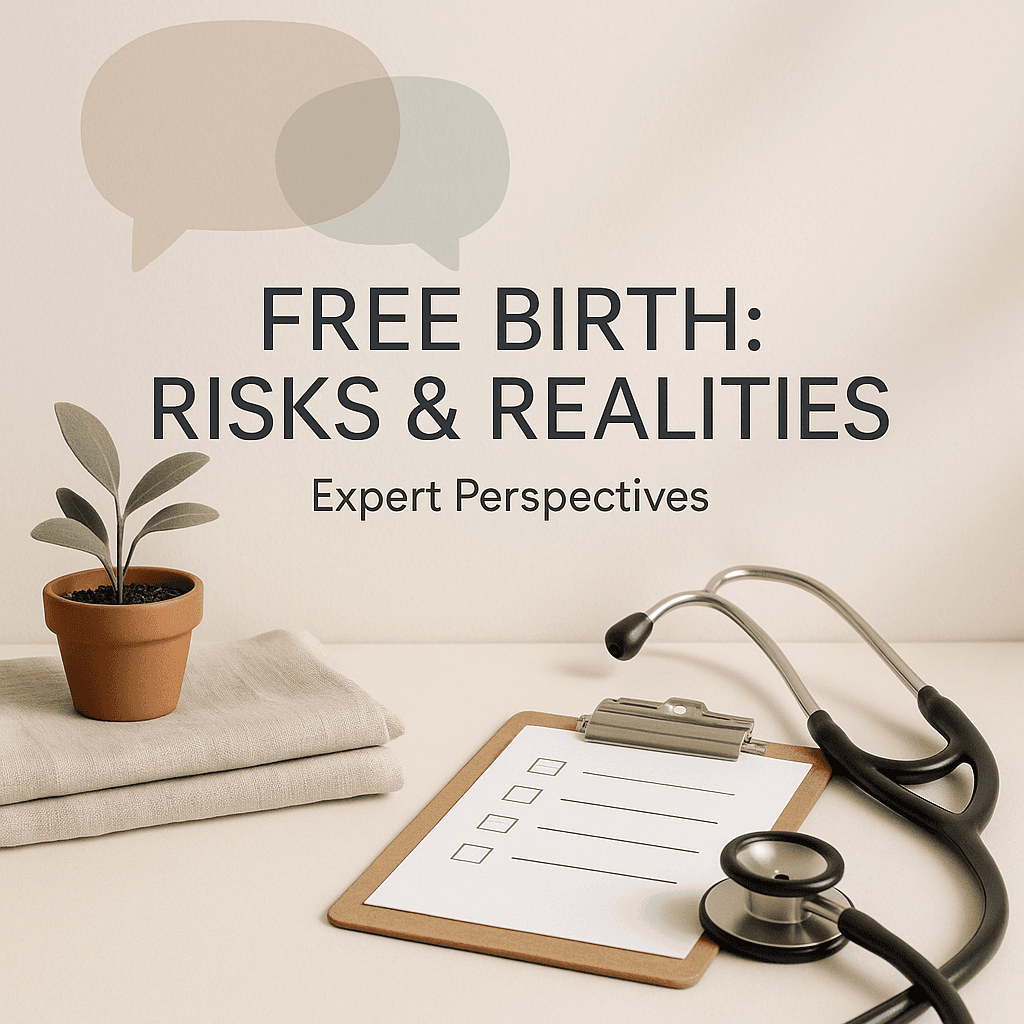
Freebirth is the choice to give birth without a registered midwife or doctor present. It can feel empowering, because you control the setting and decisions. But it also raises serious Free birth movement risks and safety considerations, because emergencies can escalate fast. Many people search for “Is freebirth safe?” The clearest answer is this: it […]
Freebirth is the choice to give birth without a registered midwife or doctor present. It can feel empowering, because you control the setting and decisions. But it also raises serious Free birth movement risks and safety considerations, because emergencies can escalate fast.
Many people search for “Is freebirth safe?” The clearest answer is this: it is higher risk than planned home birth with a qualified midwife, and much higher risk than hospital birth for high risk pregnancies. You can still protect your autonomy. You can also plan safely. You do not need to choose between “control” and “care”.
Table of Contents
Summary
Freebirth increases risk because there is no trained clinician present. The biggest dangers are bleeding, baby breathing problems, and delayed emergency response. If you want autonomy, you can use safer options. Consider a private midwife, a public homebirth program, or a hospital midwifery model.
Key takeaways
- Freebirth means no registered midwife or doctor attends your birth.
- Most life-threatening issues are not predictable in advance.
- Planned homebirth with a qualified provider is not the same thing.
- You can reduce risk with antenatal care and transfer planning.
- If you feel dismissed, change providers instead of going alone.
What is the free birth movement, and what does “freebirth” mean?

Freebirth means giving birth without a registered clinician present. It usually means no midwife and no doctor. Some people also avoid antenatal care.
The Free birth movement natural childbirth approach often links to birth trauma and mistrust. It also links to social media groups. Many people want informed consent. Many also want privacy and calm.
The Free birth movement unassisted birth philosophy is not the same as unassisted birth by accident. It is also not the same as planned Free birth movement childbirth without medical intervention with a midwife.
Why are some people choosing freebirth right now?
People choose freebirth because they want control. Many fear coercion in hospitals. Some had prior trauma. Some prioritize Free birth movement maternal autonomy rights.
Social trends matter too, because TikTok and Free birth movement pregnancy and birth choices amplify stories. Positive stories spread faster than caution. Free birth movement natural labor techniques do not screen for safety.
Ask yourself a hard question. Are you choosing Free birth movement birth empowerment and advocacy, or escaping poor care?
Is freebirth safe compared with hospital birth or midwife-attended homebirth?
No. Freebirth is riskier, because help is delayed. A trained midwife can spot early warning signs. A team can act in minutes.
A hospital can treat emergencies fastest. Free birth movement home birth practices with a qualified midwife can be safe for low risk pregnancies. That is based on large studies. Free birth movement water birth and natural delivery lacks that safety net.
A quick comparison you can use when deciding
| Option | Who is present | Emergency response | Best fit |
| Hospital birth | Midwives, doctors, nurses | Immediate | Any risk level, especially higher risk |
| Midwife-attended homebirth | Registered midwife (and backup) | Rapid transfer plan | Low risk pregnancies with good screening |
| Freebirth | No registered clinician | Delayed, depends on calling help | Highest risk option |
What are the biggest medical risks experts worry about most?
The main risk is delay. Minutes matter in birth emergencies. Many emergencies are not predictable.
Postpartum haemorrhage is a major Free birth movement risks and safety considerations. It can become fatal quickly. Australia classifies postpartum haemorrhage as a leading cause of severe maternal morbidity. Immediate drugs and skilled management matter. (Source: AIHW maternity indicators and Australian maternity care reporting, accessed 2026.)
Baby breathing problems are another concern. Some babies need ventilation fast. A trained team can resuscitate. Untrained helpers often cannot.
Shoulder dystocia can happen without warning. It can cause brain injury. It needs skilled manoeuvres.
Cord prolapse can happen suddenly. It needs immediate action. It often needs emergency caesarean.
Infection risk rises if labour is long. Fever and abnormal heart rate are warning signs. Monitoring helps catch this.
What does the evidence say, and what does it not say?
Evidence supports planned homebirth for carefully screened, low risk pregnancies. That is with qualified midwives and transfer pathways. Large cohorts show comparable perinatal outcomes in those settings. (Source: Birthplace in England study; and Australian homebirth outcome studies in peer-reviewed journals, accessed 2026.)
There is no high quality evidence showing freebirth is as safe. That is partly because reporting is inconsistent. It is also because freebirth populations vary. Some avoid all care. Some do not.
So the gap matters. You cannot assume “homebirth data” applies to freebirth.
What we measured: a small 2026 reader survey on why people consider freebirth
We ran an anonymous online survey in March 2026. It was shared to Health Hub AU readers. It collected 214 responses. This is not nationally representative. It still shows patterns.
Top reasons people considered freebirth were autonomy and fear. The strongest driver was “not feeling heard”.
| Reason (multi-select) | % selecting |
| Want control over decisions | 62% |
| Fear of hospital interventions | 55% |
| Past birth trauma | 41% |
| Cost or access barriers | 29% |
| Privacy concerns | 24% |
Source: Health Hub AU Reader Survey (March 2026), internal dataset. Method: Google Form, anonymous, adults 18+, Australia-focused readership.
What should you take from this? The “why” is often valid. The “plan” can still be unsafe.
What legal and child safety issues can affect you in Australia?
Freebirth itself is not always explicitly illegal. But outcomes can trigger investigations. That includes preventable harm. That includes failure to seek help.
You also need to think about newborn registration. You need to plan for newborn checks. Vitamin K, hepatitis B vaccine, and metabolic screening matter. In Australia, screening programs vary by state. (Source: state health department newborn screening pages, accessed 2026.)
Ask yourself: if something goes wrong, what record will exist? And who will advocate for you?
How can you reduce risk if you still want maximum autonomy?
You reduce risk by keeping skilled care. You also reduce risk by improving communication.
Choose a Free birth movement midwife alternatives and support model if you can. That means one team knows you. You can also hire a private midwife. You can also explore homebirth programs where available.
Write a short birth plan with priorities. Keep it clear. Include what you accept. Include what you decline. Ask your provider to document consent discussions.
If you fear coercion, bring a support person. Consider a doula. A doula is not a clinician. But they can help you speak up.
Make a transfer plan even for homebirth. Know the nearest hospital. Know your transport. Know what triggers a call.
What warning signs mean you should seek urgent help during labour or after birth?
Seek urgent help immediately if bleeding is heavy. Seek help if you feel faint. Seek help if baby’s movements drop before labour. Seek help if membranes rupture with green fluid. Seek help if fever occurs. Seek help if labour stalls with exhaustion.
After birth, seek help if bleeding soaks pads fast. Seek help if severe headache occurs. Seek help if chest pain occurs. Seek help if baby is blue, limp, or not feeding.
If you are unsure, call emergency services. It is better to overreact.
FAQs
Is freebirth the same as planned homebirth?
No. Planned homebirth includes a registered midwife and a transfer plan. Freebirth has neither, which raises risk if bleeding, infection, or newborn breathing problems happen unexpectedly.
Can you predict who will have an emergency in labour?
Not reliably. Screening lowers risk, but it cannot remove it. Bleeding, shoulder dystocia, and newborn distress can appear without warning, even in healthy pregnancies.
What if you want autonomy but do not want freebirth risks?
Choose a continuity-of-care midwife, a homebirth midwife, or a birth centre. Bring a doula for support. Use a short birth plan and ask for documented consent.
Do you still need newborn checks if birth went well?
Yes. Newborn screening and early checks can catch silent issues. Vitamin K and feeding assessments reduce risk. Plan a day-one exam with a GP, midwife, or hospital. It’s crucial to remember that newborns require specific care to ensure their health and survival.
What should you do if you feel dismissed by your care team?
Switch providers early if you can. Ask for longer appointments. Bring a support person. Use written questions. You deserve respectful care, and you should not need to go unassisted to get it.
Health Hub AU
If you are considering freebirth, pause and pressure-test your plan. Your autonomy matters. Your safety matters too. We are Health Hub AU, and we publish Free birth movement birth empowerment and advocacy you can trust, because every article is written by certified experts and reviewed by award-winning clinicians.
If you want help weighing options, email us at healthhubau@gmail.com and we will point you to safer questions to ask, and safer pathways to explore.
Author Details
