
Gut Health Australia: Everything You Need to Know 2026
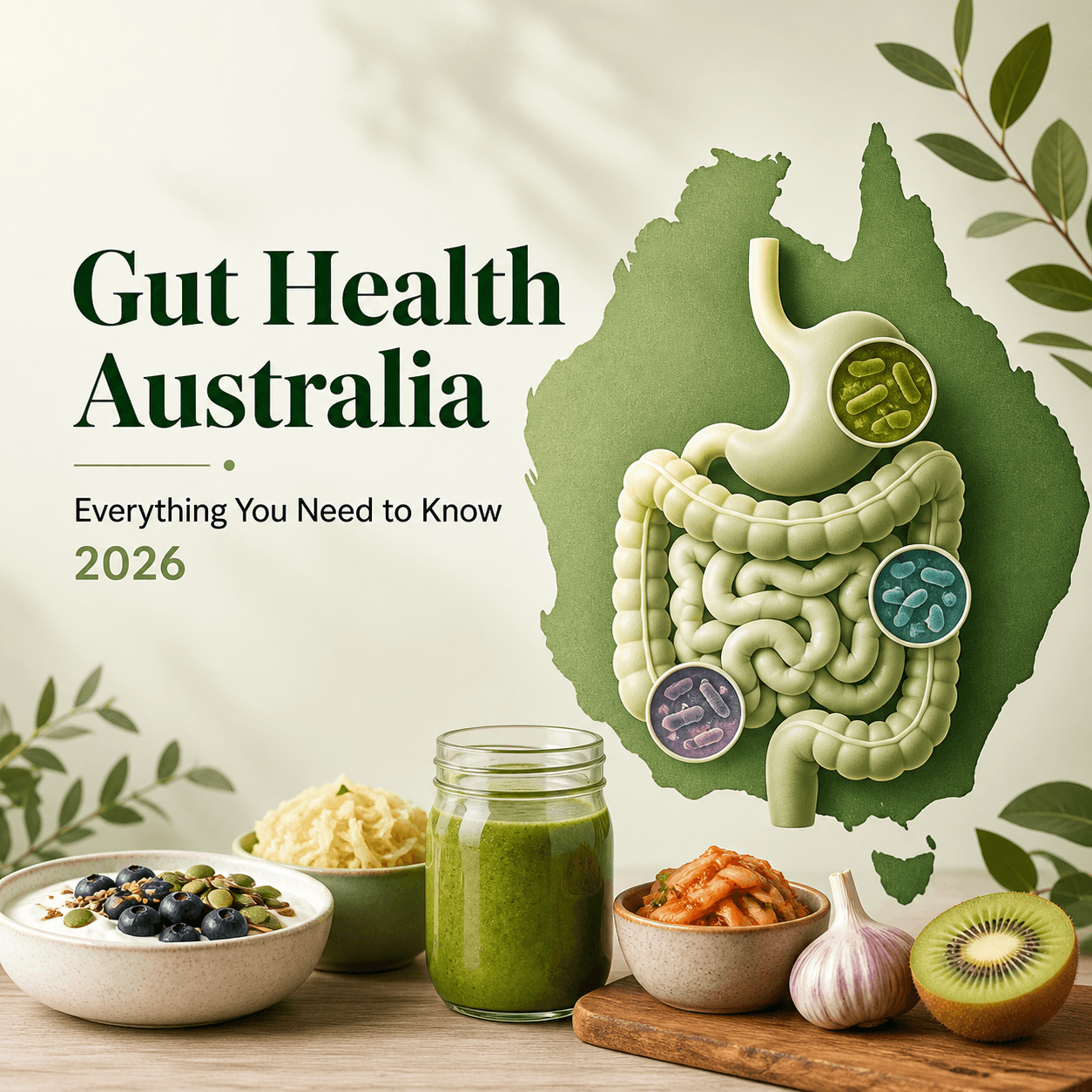
Did you know that according to the ABS National Health Survey 96% of Australian children and adolescents are not meeting the daily recommended servings of vegetables? (AIHW) This is a severe worry for gut health Australia and a potential risk to the nation’s gut microbiota. That’s why “gut health Australia” has become one of the […]
Did you know that according to the ABS National Health Survey 96% of Australian children and adolescents are not meeting the daily recommended servings of vegetables? (AIHW) This is a severe worry for gut health Australia and a potential risk to the nation’s gut microbiota.
That’s why “gut health Australia” has become one of the most searched wellness topics nationwide, and why this guide focuses on what actually works here, with our food culture, climate, travel patterns, and healthcare access.
In this 2026 guide, we’ll cover the smartest, most practical ways to improve gut health in Australia style, including food choices you can buy, supplement options Australians commonly use, and red flags that mean you should speak with a GP or dietitian. We’ll also keep it grounded, because “fix your gut” advice often turns into expensive guesswork.
Table of Contents
What does “gut health” mean in Australia in 2026?

Gut health Australia now means more than “no bloating.” It means your digestive system digests and absorbs well, your gut lining stays resilient, and your microbiome stays diverse enough to support immune balance and lower inflammation.
In everyday terms, good gut health in Australia tends to look like consistent bowel motions, minimal reflux, stable appetite cues, fewer food-trigger flare-ups, better tolerance to stress, and fewer frequent infections. You don’t need perfection. You need steadiness.
What counts as “normal” digestion, realistically?
A healthy range includes bowel motions anywhere from three times per day to three times per week, as long as you feel comfortable and you don’t strain. In gut health Australia, we also look at stool consistency, urgency, pain, visible blood, and patterns that change suddenly.
If you regularly deal with severe pain, persistent diarrhoea, constipation that doesn’t shift, unexplained weight loss, black stools, or blood in stools, treat that as medical, not lifestyle.
Why gut health in Australia matters more than ever in 2026
In gut health Australia, modern life pushes your gut from multiple angles at once. You might eat well most days, but travel, late nights, chronic stress, alcohol culture, medication use, and convenience foods can still nudge symptoms.
Here’s what we commonly see across gut health in Australia conversations in 2026: more people report IBS-like symptoms, reflux, food intolerances, and stress-linked flares. People also want a plan that doesn’t require cutting everything out.
The gut connects to more than digestion
When you improve gut health Australia style, people often report changes in:
- Energy and afternoon crashes
- Skin breakouts and redness
- Sugar cravings and appetite swings
- Mood stability and stress tolerance
- Immune resilience during cold/flu seasons
- Period symptoms (in some people, via inflammation and gut-brain signaling)
You can’t “biohack” your way past the basics. Food quality, fibre, sleep, and stress management still win.
Which symptoms suggest you should focus on gut health first?
If you want a simple signpost for gut health Australia, look for patterns, not one-off days. Common gut-related symptoms include bloating, gas, reflux, nausea, diarrhoea, constipation, abdominal pain, and unpredictable urgency. But you might also notice fatigue after meals, food fear, and anxiety about symptoms when you leave the house.
When symptoms become a “see your GP” situation
In gut health, Australia, take these seriously and seek medical advice:
- Blood in stools, black/tarry stools, or persistent mucus
- Fever, severe pain, dehydration, fainting
- Unexplained weight loss, persistent vomiting, trouble swallowing
- New symptoms after age 50, or a sudden big change
- Family history of bowel cancer, IBD, or coeliac disease
- Symptoms that wake you at night repeatedly
Lifestyle changes help but you still need the right diagnosis. It’s crucial to understand that these gut health issues are not just personal inconveniences but are becoming a significant public health concern. As highlighted in this recent article, the rise in gut-related health issues is alarming and calls for immediate attention from both individuals and healthcare providers alike.
What should you eat for gut health in Australia without overcomplicating it?

For gut health Australia, food variety matters more than perfection. Your microbiome thrives on diverse fibres and plant compounds. That doesn’t mean you must go fully plant-based. It means you should build meals around plant diversity.
A helpful 2026 mindset for gut health in Australia: “Add before you subtract.” Add fibre, add colour, add fermented foods. Only remove foods when a clear pattern shows up.
What to prioritise in your weekly shop in Australia
In gut health in Australia, these foods consistently support better outcomes for most people:
High-fibre staples: oats, barley, brown rice, quinoa, wholemeal sourdough (often easier to tolerate than standard bread), sweet potato, pumpkin.
Legumes: lentils, chickpeas, cannellini beans, edamame. Start with small serves if you bloat.
Fruit and veg: berries, kiwi fruit, oranges, bananas (less ripe for more resistant starch), leafy greens, carrots, capsicum, zucchini, tomatoes.
Nuts and seeds: chia, flaxseed, pepitas, almonds, walnuts.
Fermented foods: live yoghurt, kefir, sauerkraut, kimchi, miso, tempeh.
Healthy fats: extra virgin olive oil, avocado, oily fish.
How much fibre do Australians actually need?
Most adults benefit from about 25–38g fibre daily, depending on sex, size, and energy needs. In gut health Australia, many people sit well below that, especially when they rely on packaged snacks and takeaways.
Increase fibre slowly. If you jump from 15g to 35g overnight, you can trigger bloating and cramps. Add 5g every few days, drink enough water, and keep walking.
A simple “gut health plate” you can follow

For gut health Australia, build most meals like this: half colourful vegetables, a quarter protein, a quarter whole grains or starchy veg, plus a spoon of healthy fat. Then add “microbiome extras” like herbs, spices, legumes, or fermented sides.
Do you need probiotics for gut health in Australia in 2026?
You don’t always need probiotics. In gut health in Australia, many people do better when they fix fibre, stress, and sleep first. Probiotics can help specific situations, but you should match the product to your goal.
Think of probiotics like tools, not vitamins. Use them with intent.
When probiotics may help
In gut health Australia, people often use probiotics for:
- Antibiotic-associated diarrhoea risk
- Some IBS symptom patterns
- Traveller’s diarrhoea prevention (depending on destination and strains)
- Post-gastro recovery support
- Specific women’s health concerns (strain-dependent)
How to choose a probiotic without wasting money
Look for a clear strain listing (not just “probiotic blend”), a realistic CFU count, and storage instructions you can actually follow. If a brand promises to “cure leaky gut” or “detox parasites” in a week, skip it.
If you feel worse after starting a probiotic, stop. In gut health Australia, that doesn’t mean “die-off.” It often means the product doesn’t suit you, the dose runs too high, or you need a different approach.
What are prebiotics, and why do they matter in gut health Australia?
Prebiotics feed your beneficial microbes. If probiotics act like “adding fish to a tank,” prebiotics act like “feeding the fish.” For gut health Australia, prebiotics usually create bigger long-term shifts than random probiotic cycling.
Easy prebiotic foods in Australia
You can support gut health in Australia with prebiotics from onion, garlic, leek, asparagus, oats, barley, legumes, firm bananas, cooked-and-cooled potato or rice (resistant starch), and apples.
If you have IBS and react to onion/garlic, you can still build prebiotics through oats, chia, kiwi fruit, and small serves of legumes that you tolerate.
What causes bloating most often for people focusing on gut health Australia?
Bloating has many causes, and you can’t fix it with one trick. In gut health Australia, the most common drivers include constipation, rapid fibre increases, high FODMAP loads, carbonated drinks, swallowing air (fast eating, gum), stress, lactose intolerance, coeliac disease, and IBS patterns.
Start with the basics: slow down when you eat, check your fibre ramp-up, and track what happens across three days, not one meal.
A practical bloating reset you can try this week
For gut health in Australia, try three days of simpler meals: oats or eggs for breakfast, rice and cooked vegetables with protein for lunch and dinner, fruit you tolerate, and plenty of water. Keep coffee moderate, skip fizzy drinks, and walk after meals. Then reintroduce higher-FODMAP foods more intentionally.
If you keep bloating no matter what you do, speak with a clinician. You might need coeliac testing, breath testing, or a targeted plan.
What does an IBS-friendly gut health Australia plan look like?
IBS needs personalisation. Many Australians do best with a structured approach rather than internet elimination diets. In gut health Australia, people often start with a symptom diary and simple swaps, then trial a clinician-guided low FODMAP approach if needed.
Important: don’t self-diagnose IBS if you have red-flag symptoms. Get checked first.
What helps many IBS patterns
Regular meal timing, soluble fibre (like psyllium), stress management, and gentle movement can reduce symptoms. Some people benefit from peppermint oil, but you should avoid it if reflux dominates.
How do antibiotics and common medications affect gut health Australia?
Antibiotics can disrupt gut microbes, and some people feel changes for weeks. In gut health Australia, we also see gut side effects from common medications like metformin, some antidepressants, NSAIDs, and acid suppressants.
You should never stop prescribed medication without medical guidance. Instead, support your gut during and after treatment with fibre diversity, hydration, and a probiotic only when it fits your situation.
Which gut health tests do Australians actually need?
Most people don’t need expensive online stool tests to improve gut health Australia outcomes. You need the right medical tests when symptoms suggest a specific condition.
In Australia, a GP may consider coeliac blood tests, stool tests for infection, inflammation markers (like faecal calprotectin), breath tests for lactose intolerance or SIBO in selected cases, and routine bloodwork depending on symptoms. Your clinician will choose based on your story.
If a company promises a single test that “finds the root cause of everything,” treat it as marketing.
What does a realistic 7-day gut health meal framework in Australia look like?

You don’t need a rigid meal plan. For gut health Australia, you need a repeatable structure you can rotate. Use this as a flexible framework and swap foods based on tolerance.
Choose a breakfast base (oats with chia and berries, or eggs with wholegrain toast and spinach). Choose a lunch base (grain bowl with legumes and salad, or leftovers). Choose a dinner base (protein + cooked veg + whole grain). Add one fermented food daily if tolerated. Snack on fruit, nuts, yoghurt, or hummus with veggies.
If you want a simple diversity goal for gut health Australia, try to hit five different plant foods per day and 20–30 per week. Incorporating a variety of foods is essential as research suggests that dietary diversity is linked to improved gut health and microbiome composition source.
What does “good gut health” look like if you track progress properly?
In gut health, Australia, progress usually shows up as fewer flare days, less symptom intensity, and more food flexibility. You should also feel more confident leaving the house without planning around toilets.
Track these for two to four weeks: stool consistency, frequency, pain, bloating, reflux, energy, and sleep. Then change one variable at a time so you can actually learn what works.
How can Australians improve gut health while eating out, travelling, or working shift hours?
You can protect gut health Australia even when life gets messy. You just need a simple “minimum viable routine.”
When you eat out, choose meals with vegetables and a fibre source, and go easy on fried foods and creamy sauces if you know they trigger symptoms. When you travel, hydrate, bring fibre-forward snacks, and consider a probiotic only if you know it helps you.
For shift workers, keep meal timing consistent within your roster, prioritise protein and fibre early in your “day,” and create a wind-down routine after shifts. In gut health, Australia, shift work often triggers constipation and reflux, so you should support sleep and meal spacing.
A step-by-step plan you can follow for gut health Australia starting today
If you feel overwhelmed, use this order. It keeps gut health Australia simple and effective.
Start by drinking more water and walking after meals. Then add fibre slowly until you reach your target range. Next, increase plant diversity across the week. Add fermented foods if you tolerate them. Then address sleep and stress routines. After that, consider targeted supplements, not before.
If symptoms persist, book in with a GP and ask for a structured work-up. You deserve clarity, not endless guessing.
Key takeaways you can use today
If you only do a few things for gut health in Australia, do these first.
- Aim for 25–38g fibre daily, then increase slowly. Add legumes, oats, chia, berries, and vegetables you enjoy.
- Eat 20–30 different plant foods weekly (veg, fruit, legumes, whole grains, nuts, seeds, herbs, spices).
- Add one fermented food daily if you tolerate it (live yoghurt, kefir, sauerkraut, kimchi, miso).
- Prioritise sleep and stress regulation, because cortisol shifts gut motility and symptoms fast.
- Use probiotics/prebiotics strategically, not randomly, and stop if symptoms worsen.
Conclusion
You can improve gut health Australia in 2026 without extreme restriction. Most people win by eating more diverse plants, increasing fibre gradually, adding fermented foods when tolerated, moving daily, sleeping consistently, and using supplements only with a clear goal. When you treat gut health like a system, not a quick fix, you usually feel changes faster than you expect.
If you feel stuck, please don’t turn your gut into a DIY science experiment. We built Health Hub AU in July 2025 to give Australians clear, safe, expert-backed guidance you can actually use.
We write every piece with certified experts, and our reviewing doctors and health professionals push us to stay accurate, current, and practical.
If this guide helped, explore more of our wellness content and share it with someone who keeps googling gut health in Australia at 1am. If you want to reach us, email healthhubau@gmail.com. We’re here to help you make smarter health choices, one calm step at a time.
FAQs
How long does it take to improve gut health in Australian style?
Most people notice early changes in 7–14 days when they add fibre slowly, walk daily, and reduce ultra-processed foods. Bigger, steadier improvements usually take 4–12 weeks of consistent habits.
Do probiotics work for everyone focusing on gut health Australia?
No. Probiotics help specific situations and specific symptom patterns. Many people do better with prebiotic fibre and plant diversity first. If probiotics worsen bloating or pain, stop and reassess.
What foods should I avoid for gut health Australia?
Avoid foods that trigger your symptoms consistently, not foods that influencers fear. Many Australians react to ultra-processed foods, excess alcohol, and large fatty meals. Get tested before cutting major food groups.
What’s the easiest daily habit for better gut health in Australia results?
Walk for 10 minutes after meals. This supports motility and blood sugar control, and it often reduces bloating. Pair it with a slow fibre increase for a strong, simple routine.
When should I see a doctor about gut health concerns in Australia?
See a GP if you notice blood in stools, black stools, severe pain, fever, unexplained weight loss, persistent vomiting, or symptoms that wake you at night. Also seek help if symptoms keep worsening.
Disclaimer: This article is for informational purposes only and does not constitute medical advice. Always consult a qualified healthcare professional before making any changes to your diet, exercise routine, or health regimen. The information provided is general in nature and may not apply to your individual circumstances.
Author Details
